The Linear Forest Hidden in Plain Sight
Across agricultural frontlines, a quiet visual change is taking place. The old boundary is made from treated timber, wire, and eventually a scatter of leaning posts softened by rot. The newer boundary is green. It sprouts, thickens, flowers, casts shade, and continues to grow after installation. What first appears to be a fence is, on closer inspection, a narrow forest arranged with deliberate purpose.
A living fence does more than confine cattle, mark ownership, or divide pasture from road. It turns a property line into ecological architecture. Rooted stakes hold soil, branches create shelter, leaves moderate heat, and fruit or flowers provide resources for wildlife. Along fragmented tropical landscapes, the simple act of planting vegetative posts can become a form of canopy repair, connecting isolated trees and remnant woodland through a boundary that remains productive for the farm.
Rethinking Pastoral Edges and Pasture Dynamics
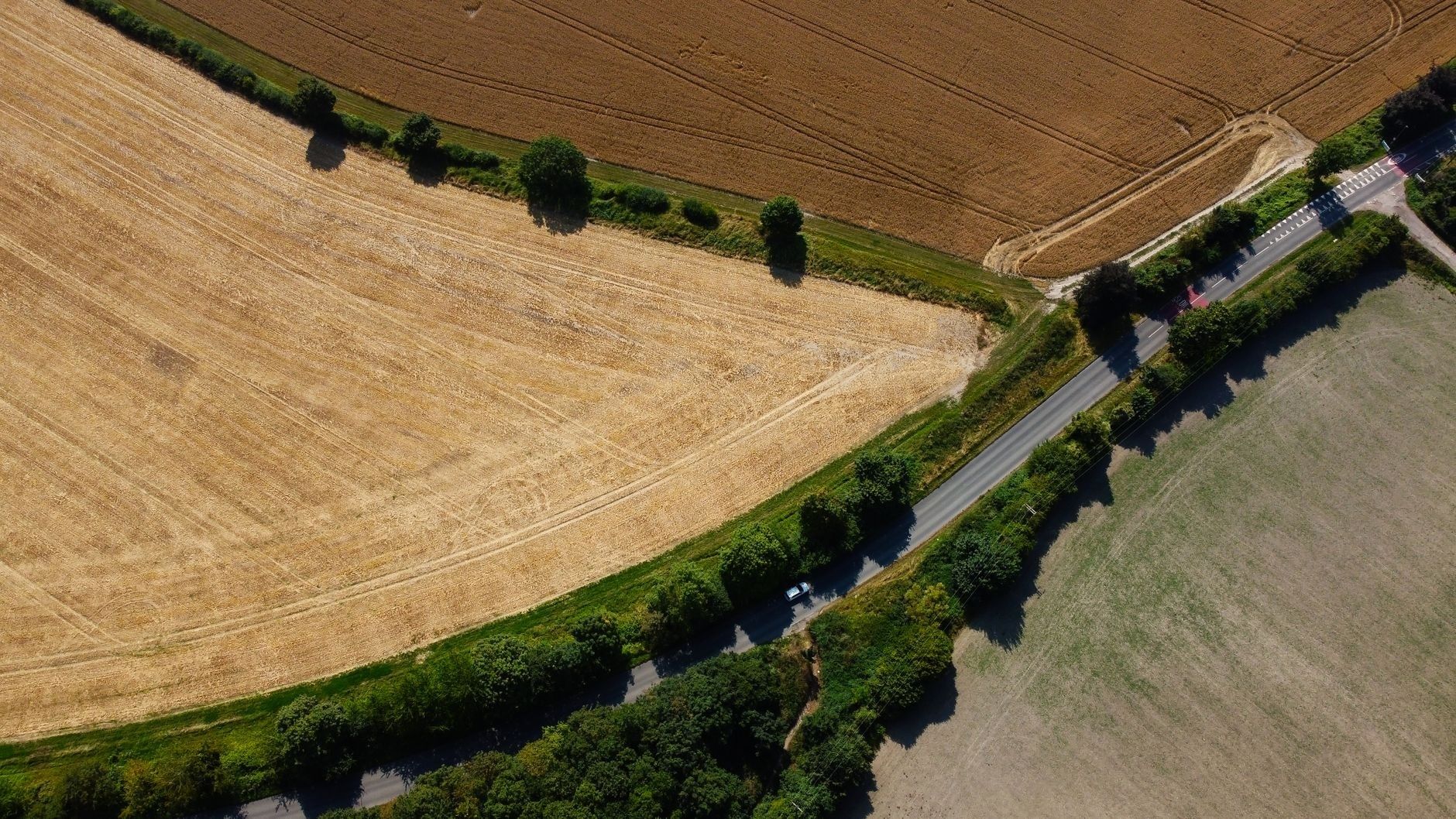
Pastures are often described as open spaces, but openness is not the same as ecological emptiness. A grazed field can contain valuable grassland habitat, yet a pasture stripped of trees, shrubs, and structural variation offers few resting places for birds, little refuge for small mammals, and limited protection from heat and wind. A silvopastoral boundary changes that equation without requiring the entire field to become woodland. It introduces a narrow, managed layer of woody vegetation where agricultural function and habitat value can overlap.
The economic logic is equally practical. A dead post has a fixed lifespan. It gradually weakens, needs replacement, and carries the hidden costs of cutting, transport, and installation. A suitable live post can root, thicken, branch, and repair minor damage through continued growth. It is not maintenance-free, and poor species selection can create new problems, but its durability is biological rather than merely structural. The fence becomes an asset that enlarges over time instead of an object that steadily depreciates.
This does not mean that every pasture should be densely wooded. Stock movement, machinery access, fire risk, visibility, and forage production must remain part of the design. The strongest systems establish a negotiated edge, with trees placed where they can provide shade, browse, wind protection, or corridor value without obstructing essential operations. Research from the Azores offers a useful example of this integrated thinking. The proposal links dairy farming, rotational grazing, reforestation, and landscape connectivity through a patch-corridor-matrix approach. A closer look is available in research on cattle and reforestation.
- Use living boundaries to divide grazing units while retaining shade and shelter.
- Place denser plantings along erosion-prone contours, streams, roads, and exposed field margins.
- Combine structural species with selected fodder or fruiting trees where browsing can be controlled.
- Protect young plants until their stems can withstand livestock pressure.
- Monitor whether the boundary improves pasture use rather than simply adding vegetation.
Functional Botanical Anatomy of Working Boundaries
The success of a living fence begins with botanical suitability, not enthusiasm for a particular tree. The best species differ by climate, soil, water availability, livestock, and local legal status, but several traits matter widely. A cutting should be capable of producing adventitious roots, establishing quickly, and developing a crown that can be managed without constant replacement. The plant should also tolerate repeated pruning and, where relevant, offer useful browse without becoming so palatable that cattle destroy it before establishment.
Species selection should be treated as a portfolio rather than a single-species bet. In tropical settings, Gliricidia sepium is often valued for its capacity to establish from large cuttings, its nitrogen-fixing association, and its potential use in fodder and green manure systems. Other trees may contribute stronger posts, fruit, flowers, timber, or habitat structure. A restoration nursery described for a farm in Bocas del Toro, Panama, illustrates this broader approach by combining native forest species with agroproductive and water-protection objectives. Its listed planting palette includes matarratón, macano, mayo, espavé, jagua, bamboo, guayacán, roble, and other locally relevant trees.
| Selection question | Why it matters | What to observe |
|---|---|---|
| Can the species root from cuttings? | Rapid rooting lowers establishment costs and reduces nursery dependence. | Fresh shoots, rooting response, and survival under local moisture conditions. |
| Can it tolerate repeated pruning? | Pollarding and coppicing provide fence material, browse, mulch, or stakes. | Strong regrowth after carefully timed cuts. |
| How palatable is it? | Highly palatable young growth may be lost to livestock. | Browsing pressure and the need for temporary protection. |
| What root system does it form? | Deep or fibrous roots can stabilize soil, but aggressive roots may threaten drains or structures. | Surface rooting, bank stability, and proximity to ponds or foundations. |
| What habitat does it provide? | Flowers, fruit, foliage, cavities, and branching patterns support different wildlife. | Seasonal resources and compatibility with native fauna. |
The root zone is one of the least visible functions of a living boundary. Dense hedgerow roots slow surface runoff, bind loose soil, and create channels through which water can infiltrate rather than rush downslope. Along streams and wetland margins, the correct species can help protect banks and shade water, although planting must respect hydrological conditions and avoid species whose roots could damage sealed ponds, drains, or infrastructure. A boundary placed across a contour can therefore be more than a line of posts. It can become a modest piece of watershed infrastructure.
Arboreal Highways and the Mechanics of Canopy Connectivity
Wildlife does not experience a farm boundary as a legal line. Birds see gaps between perches, bats follow sheltered routes, and small mammals judge whether a crossing offers cover from predators. A continuous or semi-continuous living fence can reduce the severity of those gaps. It gives mobile species a sequence of branches, foliage, and resting points across otherwise open ground. For species reluctant to cross large clearings, even a narrow line of vegetation may make movement more feasible.
The value of a corridor depends on its structure, not simply its length. A thin row of identical trees may offer little seasonal food or shelter, while a layered boundary containing lower shrubs, mid-level branches, climbers, and occasional taller crowns can serve several groups at once. Field research from Central American agricultural mosaics demonstrates this connectivity directly: in a comprehensive study across 448 plots in Catacamas, Honduras, Marie-Ange Ngo Bieng and colleagues (2022) evaluated tree species richness across secondary forests, coffee agroforestry systems, and live fences (cercas vivas), demonstrating that working linear boundaries harbor significant floristic diversity and serve as critical functional bridges through cleared pastureland. Further details on these landscape-scale dynamics can be reviewed through the Catacamas agroforestry and connectivity study.
Canopy connection also alters the immediate climate of the farm. Interlocking branches reduce direct solar exposure, slow wind, and retain humidity beneath the foliage. These effects can protect livestock during heat, reduce desiccation at the field edge, and create more stable conditions for insects, fungi, and understory plants. In coffee landscapes, shade systems demonstrate how tree cover can support birds, insect control, seed dispersal, soil protection, and water regulation. A living fence is narrower than a shaded plantation, but the underlying principle is similar: vegetation creates a more hospitable microclimate than an exposed line of wire.
- Favor irregular structure over a perfectly uniform wall when wildlife value is a priority.
- Retain occasional taller trees as stepping stones between larger forest patches.
- Include flowering and fruiting periods that overlap across seasons.
- Leave selected ground cover where it does not compromise stock control or fire safety.
- Inspect corridor continuity after storms, pruning, grazing, and drought.
Establishing and Managing Living Enclosures Over Time
Installation begins before a cutting reaches the soil. Select vigorous, disease-free material from appropriate parent plants, then make clean cuts with sharp tools. The lower end should be identifiable, and the material should be kept shaded and protected from drying while it is transported or stored. Depending on species and local practice, stakes may be allowed to season briefly before planting, but excessive drying can destroy the living tissue needed for rooting. The correct timing is usually linked to dependable moisture and the beginning of active growth, not to a calendar date alone.
Spacing should reflect the intended function. A stockproof hedge requires a different arrangement from a line of timber posts or a loose wildlife corridor. Young plants need protection from browsing, trampling, fire, and competing weeds. Mulch can conserve moisture, but it should not be piled tightly against the stem. Early inspections are more valuable than heroic repairs later, particularly after the first grazing period or a severe wind event.
- Survey the boundary. Mark drainage paths, livestock pressure points, access gates, utilities, structures, and areas vulnerable to erosion.
- Choose a mixed planting palette. Combine locally suitable structural, fodder, flowering, fruiting, and soil-protective species.
- Prepare and plant the stakes. Use sound material, orient it correctly, firm the soil around it, and provide temporary protection where browsing is likely.
- Install wire carefully. Attach fencing so it guides livestock without strangling the stem. Leave room for trunk expansion and inspect ties or staples as the plant thickens.
- Begin formative pruning. Encourage branching at the desired height, remove dangerous forks, and retain enough foliage for vigorous establishment.
- Adopt a rotation for pollarding or coppicing. Cut sections in sequence so the boundary never loses all its shade, shelter, or structural continuity at once.
Wire deserves particular attention. A fence that is loose at installation may become dangerously tight as trunks expand. Fast-growing stems can engulf wire, and constriction can damage the vascular cambium, weaken the plant, and create a point of failure. Adjustable clips, correctly positioned staples, or periodic relocation of the wire can preserve both fence tension and tree health. The boundary should be inspected as a living structure, not treated as finished once the original posts disappear into foliage.
Pollarding and coppicing are most effective when they follow a rhythm suited to the species and the farm. Properly timed cuts can yield browse, stakes, mulch, fuelwood, or green manure while maintaining a dense lower canopy. The key is moderation. Cutting every stem simultaneously can remove habitat, expose soil, and reduce the fence to a temporary skeleton. Staggered management preserves continuity and spreads labor. This approach reflects the wider principles of agroecology described by the Food and Agriculture Organization, where plant, animal, human, and environmental health are treated as connected parts of one working system.
Weaving Productive Ground into Cohesive Canopy
A living fence does not ask agriculture to step aside for conservation. It asks the boundary to perform more than one task. The same row of trees can guide cattle, produce fodder, hold soil, shade a gate, filter runoff, and provide a route through which birds and insects move. Its value lies in this overlap, especially on farms where land cannot simply be removed from production.
The most durable shift is conceptual. A perimeter need not be a hard line of exclusion. It can be a porous lifeline, managed with the patience required by any perennial crop. When land stewards choose suitable species, protect them during establishment, tension wire with care, and prune in cycles, an ordinary division begins to acquire ecological depth. The transformation is quiet: posts leaf out, roots knit the soil, branches meet across the gap, and a working farm gradually gains a linear forest of its own.