Vibrant Secrets of the High Andean Furrows
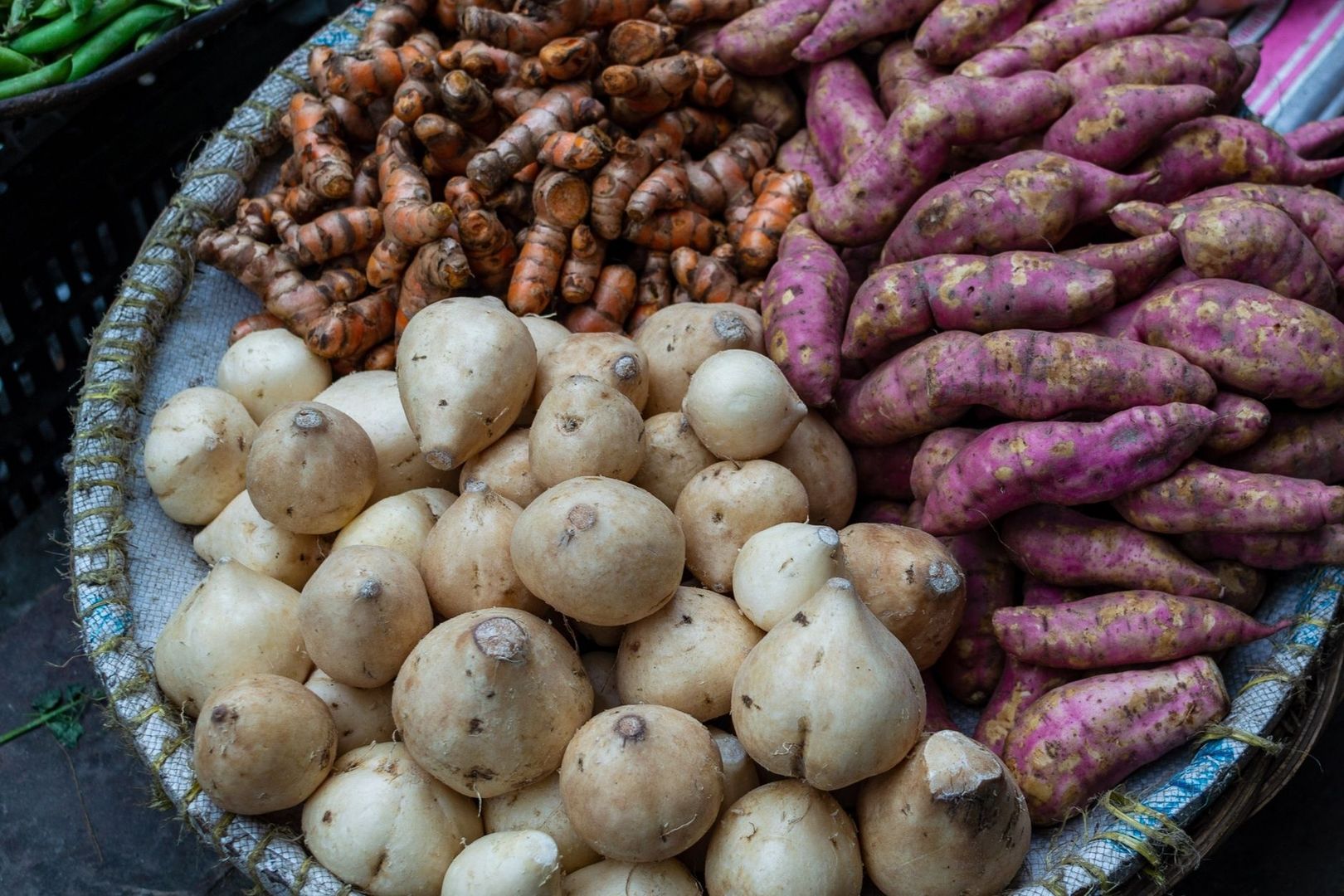
Freshly lifted from the dark soil, oca catches the light in flashes of rose, yellow, and violet. Mashua arrives more assertively, its tapered forms marked by deep reds or ink-like purple, while ulluco, smooth and polished, resembles a handful of small jewels. Around them, the Altiplano appears almost severe: broad horizons, thin air, intense sunlight, and nights capable of delivering a hard frost after a day of warmth. Yet these tubers are not curiosities surviving by accident. They are the visible expression of generations of selection under pressure.
Their importance extends well beyond novelty gardening. Oca, mashua, and ulluco embody strategies for living with climatic uncertainty: storing energy underground, responding precisely to seasonal light, defending themselves chemically, and drawing strength from landscapes rather than isolated fields. At a time when uniform cropping systems can expose entire regions to the same pest, drought, or temperature shock, the Andean example offers a different proposition. Resilience may depend less on finding one perfect crop than on maintaining many adapted crops, varieties, elevations, and forms of knowledge at once.
Botanical Armor Above Four Thousand Meters
High-altitude tubers face an unusual combination of stresses. Frost may arrive during the growing season, ultraviolet radiation is intense, and daytime temperatures can rise quickly before falling again after sunset. The plants respond through a combination of underground storage and above-ground physiology. Their tubers are protected by soil, while their leaves and stems are shaped by a short, demanding season in which every interval of warmth matters.
Many high-Andean ecotypes are strongly influenced by photoperiod. Tuberization is not triggered simply by a particular temperature; it is closely associated with shortening days, often becoming vigorous after the autumn equinox in temperate regions. This is a crucial distinction for growers outside the Andes. A plant may look healthy through summer yet produce little underground growth if the local season ends before its day-length signal initiates tuber formation. The biological clock that is advantageous in its native landscape can become a practical limitation elsewhere.
Mashua adds another layer of protection. Its tissues contain pungent glucosinolate compounds, the same broad chemical family associated with the characteristic heat of several brassica vegetables. These compounds can discourage herbivory and have been investigated for effects against certain soil pests, including nematodes. Such chemistry does not make the plant invulnerable, but it reduces dependence on external intervention. The crop carries part of its defense within its own tissues, an elegant example of biochemical adaptation rather than brute productivity.
- Underground insurance: tubers shelter reserves from short periods of cold, wind, and desiccation.
- Seasonal timing: photoperiod signals help coordinate tuber formation with the approach of cooler weather.
- Chemical defense: mashua”s pungent glucosinolates can deter pests and shape its distinctive culinary character.
- Ecotype diversity: locally selected varieties may differ in maturity, color, frost response, taste, and yield stability.
Research on Bolivian indigenous food systems makes the wider point clear. Farmers do not respond to climate change only by increasing inputs. They adjust planting dates, preserve multiple varieties, change spatial arrangements, and reconsider processing methods when water, humidity, or temperature patterns shift. The crop is therefore only one part of adaptation. The surrounding knowledge system is equally important, and it can be weakened when environmental change disrupts the conditions needed for traditional preservation.
Profiles in High Altitude Nutrition and Resilience
Although the three tubers are often grouped together, their identities in the field and kitchen are distinct. Oca tends to offer the most approachable entry point, with colorful, elongated tubers and a texture that can sit between a waxy potato and a firm root vegetable. Mashua grows vigorously in suitable cool climates and often produces tapered, irregular forms with a strong flavor that softens through cooking. Ulluco is smoother and more compact, valued for its bright colors, dense flesh, and characteristic mucilaginous quality, which can make cooked dishes pleasantly glossy.
| Crop | Recognizable traits | Agronomic character | Kitchen considerations |
|---|---|---|---|
| Oca | Colorful, elongated tubers with variable acidity | Often the most accessible Andean tuber for cool-climate growers | Roasting and cooking can mellow acidity and produce a potato-like texture |
| Mashua | Tapered tubers and pungent flavor | Vigorous in cool, maritime conditions; naturally defended by glucosinolates | Cooking reduces its sharper notes and develops a fuller flavor |
| Ulluco | Smooth, vividly colored, compact tubers | Adapted to high-altitude cultivation and valuable as a diverse germplasm resource | Retains a distinctive moist, slightly gelatinous texture when cooked |
Ulluco is especially instructive because its nutritional value is not uniform across the crop. An evaluation of 50 freeze-dried varieties from Peru”s germplasm collections found total protein ranging from 5.60 to 11.55 grams per 100 grams of dry weight. Twenty percent of the samples fell into the study”s high-protein group, while 18 percent were classified as low and 62 percent as intermediate. The finding matters because it shows why the preservation of named varieties is more useful than treating a crop as a single standardized commodity. A germplasm bank stores not merely colors and shapes, but differing nutritional possibilities.
The full findings are available in the study of olluco protein variability. Geographic origin also appeared relevant, with samples from Ayacucho showing the highest mean protein content and relatively low dispersion, while material from other regions displayed greater variation. Such results do not mean that one region supplies a universally superior plant. They indicate that conservation and evaluation should preserve breadth, allowing breeders, farmers, and communities to match varieties to changing climates and dietary needs.
Traditional processing adds another dimension. Solar curation can alter the flavor and acidity of oca, while freeze-drying and related practices remove water and concentrate stored carbohydrates. In the broader Andean food system, freezing, thawing, drying, washing, and repeated exposure to sun are not decorative culinary rituals. They are methods for extending storage, improving texture, and making certain foods more digestible or agreeable. Their success depends on precise local knowledge, including when to harvest and how environmental conditions affect the process.
The Living Geometry of Quechua and Aymara Agroecology
Andean agriculture is often described as terrace farming, but terraces are only one visible part of a larger spatial logic. Fields may be distributed across elevations, slopes, aspects, and soil types, creating a portfolio of microclimates. A frost that damages a lower plot may spare a higher one, while a dry spell in one exposure can be moderated elsewhere. This is not redundancy in the wasteful sense. It is deliberate geographic diversification, an agricultural equivalent of spreading risk across several accounts.
The sophisticated spatial management of these plots mirrors principles documented in traditional Andean agricultural systems, where elevation zoning helps mitigate catastrophic crop failure; an Authoritative Source further situates these practices within a living agricultural heritage. Terraces also slow runoff, reduce erosion, and create warmer or cooler pockets through their walls and orientation. Their value cannot be separated from communal maintenance. A terrace neglected as an isolated monument is not an agricultural system; its resilience lives in the repeated labor that keeps soils, water channels, seed stores, and social agreements functioning.
Polyculture adds another form of protection. Different plant heights interrupt pest movement, varied rooting patterns distribute demand through the soil, and staggered maturity dates reduce the chance that one weather event will erase an entire harvest. Crop mixtures can also feed a wider soil community than a uniform stand, although their benefits depend on local management rather than a universal recipe. The essential principle is diversity with purpose: plants are combined because their differences create useful interactions.
Recent research on Peru”s Agrobiodiversity Zones gives institutional language to this living practice. These territories conserve native diversity in situ through interconnected systems of production, governance, livelihoods, markets, diet, and culture. A participatory framework developed with experts, farmers, authorities, and management committees identified 30 core indicators for monitoring sustainability. The exercise is important precisely because it did not assume that outside experts and local communities would rank every priority in the same way. Resilience includes the capacity to define success locally.
Recognition of indigenous agro-pastoral heritage should therefore be understood as more than cultural endorsement. It can support seed conservation, local incomes, community authority, and the continued use of landscapes that function as living genetic reservoirs. At the same time, climate change is not a minor inconvenience. As research from Bolivia emphasizes, severe shifts may exceed the adaptive capacity of even highly diverse systems, particularly when water resources and processing environments become unreliable. Respect for ancestral knowledge must be paired with material support, ecological monitoring, and protection from land-use pressures.
Translating Altiplano Wisdom to Temperate Backyard Beds
For growers in cool maritime or temperate regions, the central challenge is not usually summer heat. It is the mismatch between the plant”s day-length response and the local frost calendar. In many places, tubers begin to swell only after the days shorten, meaning that the most important phase arrives just as cold weather threatens. A mild site with a long autumn can succeed outdoors; colder gardens may need fleece, cloches, a polytunnel, or a protected raised bed.
- Begin with sound seed tubers. Choose healthy planting material from a reliable source and start it under protection if the local spring is cold. Plant only after severe frost risk has eased, while allowing enough time for substantial vegetative growth.
- Read the light calendar. Expect foliage to develop before meaningful tuberization. Do not judge the crop too early, and avoid removing healthy foliage before the shortening-day signal has done its work.
- Build a forgiving bed. Use fertile, well-drained soil with consistent moisture. Mulch can moderate temperature swings and reduce moisture loss, but saturated soil should be avoided.
- Protect the late season. As nights cool, cover plants before frost rather than waiting for visible damage. In regions with deep soil freezing, harvest before the ground becomes inaccessible.
- Choose the harvest window carefully. If autumn remains mild, underground growth may continue into November. Lift after foliage declines or frost threatens, then cure the tubers in a cool, dry, shaded place.
Small-scale growers should also expect variation between accessions. One oca may mature earlier or taste more acidic than another; mashua may thrive in a cool garden yet prove unappealing at the table; ulluco may reward patience with excellent texture but produce modest yields in a short season. Keeping simple records of planting date, first frost, foliage longevity, tuber size, and flavor turns a novelty crop into a useful local trial.
The kitchen is part of that trial. Oca”s acidity often softens after exposure to sunlight or through roasting, while boiling and frying produce different balances of sweetness and firmness. Mashua benefits from thorough cooking, which can temper its pungency and reveal a richer flavor. Ulluco can be steamed, boiled, or added to soups where its moist texture contributes body. Peeling is not always necessary, but washing should be careful, particularly when tubers carry soil into the kitchen. The best preparation is not an attempt to make these foods imitate potatoes. Their value lies in their own textures and flavors.
Cultivating the Future from Ancestral Furrows
Oca, mashua, and ulluco offer a lesson in resilience that is both biological and political. Their genes carry adaptations to cold nights, changing light, pest pressure, and marginal soils, but genes alone cannot sustain a food system. Varieties must remain in cultivation, communities must retain the authority to manage them, and landscapes must continue to support the water, soils, pollinators, and processing conditions on which their use depends. Biocultural conservation protects a working relationship, not a museum specimen.
The practical invitation is therefore broader than adding an unusual tuber to a garden. Support seed keepers, community-led agrobiodiversity zones, and farmers who maintain named varieties. Grow several cultivars where conditions allow, record what performs well, and share planting material responsibly. Encourage food institutions and local markets to value diversity rather than reward only uniform size and predictable appearance. In an era of climatic turbulence, the most durable food landscape may be one composed of many modest strengths: several crops, several elevations, several harvest windows, and knowledge held in more than one place.